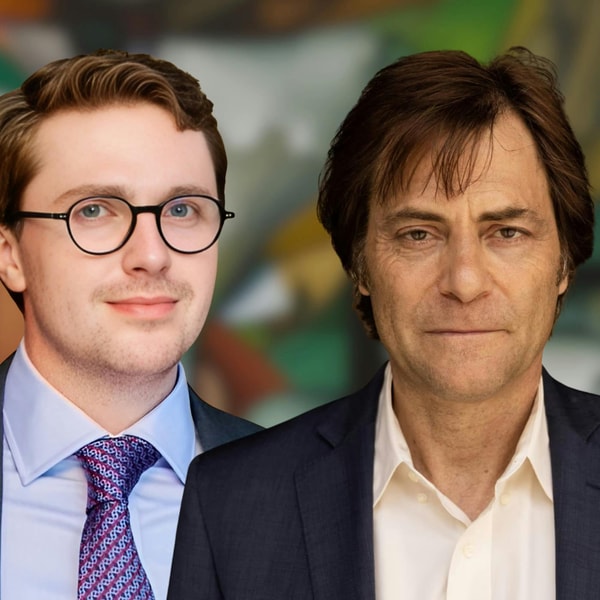
Supintelligence: To Ban or Not to Ban? Max Tegmark & Dean Ball join Liron Shapira on Doom Debates
Supintelligence: To Ban or Not to Ban? Max Tegmark & Dean Ball join Liron Shapira on Doom Debates
Supintelligence: To Ban or Not to Ban? Max Tegmark & Dean Ball join Liron Shapira on Doom Debates
In a thought-provoking debate hosted by Liron Shapira, Max Tegmark and Dean Ball present opposing views on whether the development of artificial superintelligence should be halted. The discussion cuts to the core of one of the most pressing technological dilemmas of our time: how to balance rapid innovation with existential risk mitigation. With starkly different assessments of AI’s potential dangers, the two experts explore what responsible governance might look like in an era where machines could surpass human cognitive capabilities.
Max Tegmark advocates for a binding moratorium on superintelligence until robust safety measures and broad societal consensus are achieved, warning that uncontrolled development risks human extinction—comparing it to creating a new species without safeguards. He supports a licensing model akin to nuclear or aviation regulation, emphasizing proactive oversight. In contrast, Dean Ball opposes a ban, arguing that 'superintelligence' is poorly defined and that innovation thrives through experimentation. He cautions against regulatory overreach, which could entrench monopolies or trigger institutional decay, and maintains a p(doom) below 1%. Both agree on the need for adaptive, risk-based regulation—especially for high-stakes applications like biosecurity—but differ sharply on timelines, definitions, and the feasibility of international coordination. The debate underscores a fundamental tension: whether to regulate based on precaution or resilience, with profound implications for the future of AI governance.
03:29
03:29
Dean Ball estimates p(doom) at 0.01%, significantly lower than the host's over 1%.
05:43
05:43
AI's downside may be greater than hydrogen bombs.
09:21
09:21
Defining superintelligence in a law could ban beneficial technologies
17:11
17:11
Companies should provide evidence of AI benefits and harms to independent experts, as with thalidomide.
32:35
32:35
Digital gain-of-function research lacks binding regulations unlike its biological counterpart.
36:33
36:33
Common-law liability systems fail to address tail risks in AI-enabled biothreats
42:47
42:47
Superintelligence has a much greater downside and requires a new regulatory approach
47:03
47:03
System 2 reasoning model demonstrated significant advancements in bio and cyber capabilities, altering risk assessment.
52:27
52:27
Creating an 'FDA for AI' with tiered safety levels could lead to an AI golden age.
1:02:40
1:02:40
Banning unwanted AI outcomes can spur innovation and safety.
1:17:14
1:17:14
If superintelligence takes over, it will be too late to regulate.
1:25:30
1:25:30
Max calculates controlling superintelligence fails 92% of the time in optimistic scenarios
1:34:40
1:34:40
Pursuing uncontrollable superintelligence is a suicide race
1:54:17
1:54:17
Respectful debate on AI policy is crucial social infrastructure
2:00:36
2:00:36
The gap in p(doom) estimates between experts must be resolved quickly to enable effective AI policy decisions.