The history of servers, the cloud, and what’s next – with Oxide
The Pragmatic Engineer
1 DAYS AGO
The history of servers, the cloud, and what’s next – with Oxide
The history of servers, the cloud, and what’s next – with Oxide
The Pragmatic Engineer
1 DAYS AGO
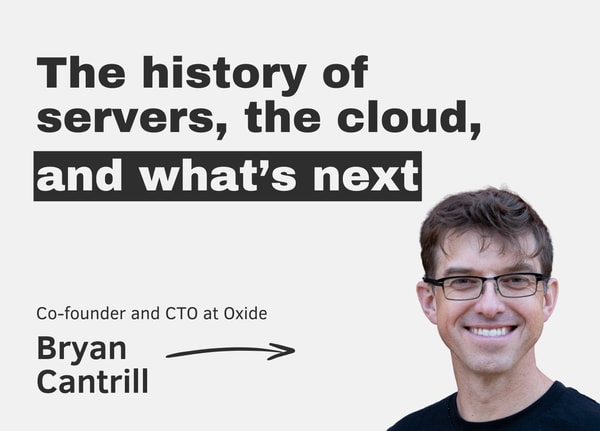
Bryan Cantrill, a veteran of Sun Microsystems and co-founder of Oxide Computer, offers a deep dive into the evolution of computing infrastructure, drawing from decades of experience at the forefront of systems engineering. From the dot-com era to the rise of cloud platforms and modern AI tools, he reflects on how technological progress is shaped not just by innovation, but by economic cycles, constraints, and cultural choices within engineering organizations.
The podcast traces the transformation of server infrastructure from the 1990s web boom through today’s cloud-native landscape. Sun Microsystems once dominated with Solaris and Java, but real technical innovation emerged during the dot-com bust, driven by necessity. The rise of AWS disrupted traditional models, enabling scalable, API-driven infrastructure, while Kubernetes later introduced cloud neutrality. Bryan highlights how hyperscalers like Google and Meta built custom systems, inspiring Oxide’s mission to design hardware and software together from first principles—eliminating legacy complexity. Oxide emphasizes reliability, transparent compensation, and distributed collaboration, using Rust-based systems for secure, autonomous updates. While AI and LLMs aid productivity, they fall short in solving deep technical problems, underscoring the need for expert teams. True innovation, Bryan argues, comes not from hype but from disciplined engineering, diverse perspectives, and maintaining core values as companies scale.
01:26
01:26
Java took off quickly after its release in 1995
04:15
04:15
Java and Solaris were foundational technologies during the dot-com build-out.
05:44
05:44
Good economic times make it hard to summon the desperation needed for innovation.
12:52
12:52
Better technical work emerged from limited resources during the bust.
17:57
17:57
By 2004–2005, x86 became the leading-edge microprocessor.
22:08
22:08
My talk about Oracle was suppressed due to fear of offending them.
24:59
24:59
Public cloud margins were good, and AWS S3 was suspected to be underwriting a war on big-box retail
30:32
30:32
Encouraging cloud neutrality benefits GCP by increasing its strategic importance.
33:33
33:33
Existing server products from Supermicro, Dell, and HP were not suitable for large-scale operations
40:53
40:53
Blind-mating networking eliminates cabling errors and enables zero-touch rack integration
48:05
48:05
Oxide recruits an extraordinary EE team from GE Medical to build custom systems without reference designs.
50:04
50:04
The uniform salary convinced candidates Oxide takes its values seriously
56:20
56:20
Shipping reliable, customer-applied updates for secure, air-gapped environments is a major engineering challenge
1:00:59
1:00:59
The first automatic update succeeded on the dog-food rack.
1:05:29
1:05:29
LLMs can't solve deeply technical or novel engineering problems
1:10:46
1:10:46
LLMs lack goals and are tools; true AI requires purposeful direction.
1:11:45
1:11:45
Engineers at Oxide are responsible for their work; LLMs assist but aren't blamed for bugs.
1:20:08
1:20:08
QA is valued equally to engineering, attracting top professionals who previously faced lower status in companies like Microsoft.
1:22:47
1:22:47
Much of server work can be done remotely using EDA tools, but bring-up requires being at the manufacturer.
1:26:38
1:26:38
We have lightning in a bottle with our team chemistry and need to protect it.
1:29:59
1:29:59
It's scarier to build something useful than to follow the traditional path, but that's where real opportunity lies.
1:36:23
1:36:23
Steve Jobs' failures at NeXT were essential for Apple's resurrection